Tampilkan postingan dengan label Contributor - Greg Klerkx. Tampilkan semua postingan

Senin, 10 Agustus 2015

on Leave a Comment

Sharing is Caring at SUDA Thai Cafe

Words & Photography by Marina Benjamin and Luiz Hara

Name: SUDA Thai Cafe

Where: St Martin’s Courtyard off Upper St. Martin’s Lane, Covent Garden, London WC2E 9AB, http://www.suda-thai.com/

Cost: Average spend is around £35 per person (not including drinks). The prices of each individual dish is shown below.

About: Tucked away in mega-hip St. Martin’s Court, just off the Seven Dials in London’s Covent Garden, Suda is a Thai-style Cafe from the creators of the much-loved Patara group of restaurants (reviewed here).

Suda is more street than suave, the concept being bites, sharing platters, and small tapas-style bowls. If Patara is sit-down formal, at Suda the vibe is fast and feisty, as befits a restaurant in the city’s go-go theatre and dining epicenter. We had a very enjoyable dinner for four on a sultry Friday evening in July and though Suda’s large dining room was hopping throughout the evening, service was consistently warm and welcoming. 

What We Ate: The food began with two sharing platters. The Suda platter is a cracking deal at £8.50 per person (minimum two people) and delightfully arrayed with a duck wrap, chicken and prawn dumplings, Thai fish and prawn lollipops, Thai prawn crackers, mini chicken satay sticks, and sweet potato curls. The lollipops were particularly tasty: moist and flavourful on the inside and crisp on the outside. The satay sauce – always a bellwether for Thai restaurants – was not too sweet and had the right note of heat to offset the tender satay chicken.


The Small Bites platter (£9.50 per person) offered encores of several Suda platter dishes, but also included marinated BBQ pork skewers that were a little fatty but compensated by some delicious grilled lamb chops, charred to perfection yet still pink and juicy. Crispy noodle-wrapped prawns were accompanied by a number of dipping sauces that were sweet and sharp by turn: a lovely play of tastes on the palate.


Reaching the main courses, we discovered that Suda excels at curry. We had the Small Bowls version, which allowed us to sample five curries whilst still leaving room for more adventuring through the Suda menu. If you’re a fan of Thai curries, we’d recommend it very highly.

Our Small Bowls carousel featured four of Suda’s meaty curries and one vegetarian curry, and all were satisfying in different ways: Gaeng Kiew Waan (£4.25) is a lovely green curry with chicken that packs a surprising back-note of heat, while Gaeng Garee Gae (£4.75), or yellow lamb curry, was mild yet complex.


Gaeng Massaman Gai (£4.25) is Suda’s take on classic Southern Thai chicken massaman and was appropriately deep and rich, ringing with playful undertones of cinnamon. Gaeng Panang Nua (£4.25) had long notes of mild curry spice amplifying well-cooked sirloin beef. The lone vegetarian curry, Gaeng Kiew Waan Pak (£3.95) didn’t let down the party: it was rich with vegetables and flavour, and medium-spiced in keeping with its meatier siblings.

Accompanying the Suda curry extravaganza was a very passable Pad Thai (£10.50 or £16.50), with juicy grilled prawns and with lime segments and crushed peanuts on the side, DIY-style. With these dishes we had Kao Mun (£3.50), mild coconut rice that was a perfect complement to the curries.


Suda’s dessert menu is simple but classic, and we managed three offerings between us, all perfect for a warm summer evening. Kao Niew I-Tim Ka-Ti (£3.95) was a perfectly judged take on a Thai classic of sticky sweet rice with homemade coconut ice cream, the latter being rich and oily and properly coconut-y in a way that is often hard to find. Kao Niew Mamuang (£5.95) was another sticky rice variation, this one with juicy chunks of tangy-sweet mango. But the real sweet treat was Gluay Hom Tod (£4.95): banana fritters pan-fried until crisp and golden, the heat sealing and intensifying the banana’s almost treacly richness, and served with vanilla ice cream topped with honey and sesame.

What We Drank: We began with cocktails from the tempting drinks menu: the Long cocktails were especially interesting, offering a distinctly Southern Asian twist on the classics. We tried a Pandan mojito - white rum with mint, pandan leaves, fresh lime, and vanilla liquor finished with soda – and a Suda passion, featuring rum with fresh passion fruit muddled with bitter lemon and sweet oranges topped with soda. Both were marvelously refreshing, but our group agreed that the cool and zingy savours of the Hendrick’s fizz – gin shaken with cucumber, fresh coriander and lemon juice – made it the refreshing star of the specialty drinks menu (all £7.45).


Many people assume that beer is the natural beverage with Thai food, but we were more than happy throughout the evening with Monsoon Valley Classic White (£19.50), a crisp Chenin Blanc/Columbard blend straight from Thailand that held up well to the curry carousel and was very drinkable on its own. It was another nice surprise in a menu full of them at Suda.


Likes: we loved the variety offered in the three different sharing platters we tried, they made for a very sociable evening, the curries were particularly good!

Dislikes: None.

Verdict: Suda is a great place for easy-going Thai cooking – it is affordable and now with a selection of sharing platters on offer, there is so much to sample from. Recommended. 

Senin, 29 Juni 2015

on Leave a Comment

Franciacorta - Italy's Answer to Champagne? We Find Out.

Words & Photography by Greg Klerkx

Think of the world’s venerable winemaking nations, and Italy will surely be near the top of the list, with rich Barolo, peppery Chianti, and dozens of other venerable varietals, regions, styles and makers happily crowding the mind. Think Italian fizz, however, and that expansive, multi-hued picture often reduces to a single frame crowded with one word: Prosecco.


This ubiquitous sparkler can, of course, be lovely; it can also be, and too often is, unbalanced and one dimensional – the stuff of a thousand cheap Bellinis. Italian winemakers have long howled that there’s much more to their country’s sparkling wine scene, and so it was with great anticipation that we sat down recently for a master class featuring six Italian sparklers looking to knock Prosecco off its perch.

The fizz in question hailed from six winemakers in one of Italy’s prominent sparkling regions, Franciacorta, located in Lombardy a couple of hours’ drive from Milan. Though wine has been made here for centuries, Franciacorta sparkling wines received DOCG status – the top quality marker in the Italian wine industry – only in 1995. The rise of Franciacorta as a producer of sparkling wine since then has been precipitous: from 3,000 bottles a year half a century ago to over 15 million bottles sold last year.


There are now 113 sparkling wine producers in Franciacorta, six of which were on show at a pop-up tasting held at Andaz Liverpool Street curated by Christopher Cooper, former head sommelier of Soho House and Gordon Ramsay Group. “Everyone should know about Franciacorta,” Christopher said. “It easily rivals Champagne for quality and often beats it for value.”

We put Christopher’s words to the test with a range of sparkling styles, beginning with a Franciacorta Brut made by Antica Fratta (£28.50, Amazon.) This non-vintage style fizz was medium dry with top notes of hay and wood-smoke and a honeyed finish that was slightly sweeter than expected, though not off-puttingly so. Very low acidity made it also very drinkable, and a fine choice to start any dinner party.


Next up was a wine made in a style called Saten (‘satin’), which is unique to Franciacorta. Made only from white grapes and with slightly lower pressure, Franciacorta Saten is typically more delicate and somewhat less bubbly than other sparklers. We had a Franciacorta Saten from Castello Bonomi that seemed an appropriately silky representative of the style, with an aromatic caramel corn nose leading to a crisp feel and very blanc de blanc notes of pear and gooseberry, an excellent match for creamy dishes (and indeed we drank it with a tasty morsel of Andaz wild mushroom stuff tortellini and lobster puree to underscore the point.)


A highlight of the event was the Ca’Del Vent Blanc de Blancs Vintage 2011, a so-called ‘zero dosage’ Extra Brut with no sugar added. Non dossato sparklers have long been a favourite aperitif in northern Italy and it’s easy to see why: absolutely bone-dry, the absence of extra sugar amplifies the pure sweet-tangy flavour of the grapes, offering a lean, fresh feel and taste. Zero-dosage wines can often been astringent, but this Franciacorta Extra Brut was a revelation that I’d happily buy by the crateful.


The Bellavista Alma Cuvee, a non-vintage Franciacorta sparkling wine, was not quite as wow as the Extra Brut but has the distinct advantage of being easily purchased in the UK (£13.21, uvinum.com.) Alas, while Franciacorta sparkling wines are broadly available in the UK, many of the labels sampled here would require a trip to Italy (or paying the appropriately steep shipping cost from a UK importer.) Bellavista is good value at the price and would match well with hearty, meaty dishes – we tasted it with a portion of aged beef roast with spring onions – and would be a fine, if not outstanding, aperitif.

Gatti Enrico Vintage 2008 is a Franciacorta Brut made in what’s known as Millesimo, or ‘year-defined’, style (Millésime is the Champagne equivalent.) Most sparkling wines are made from grapes harvested in different years, but occasionally a wine-maker produces a Millesimo to highlight the quality of a particular vintage. If the Gatti Enrico is anything to go by, 2008 was very kind to Franciacorta: this was the most classically Champagne-like of the Franciacortas, in the best possible way – earthy, bready, firm and delicious.


We finished with Franciacorta La Valle Rose (£30.49, Italyabroad.com), described by Christopher as an “up and comer” in the region. Made only from Pinot Noir grapes – and with the wine left on the skins to produce its gorgeous rosy hue – this was a soft, lightly bubbling glass filled with strawberries, pear and sunshine…just the sort of thing to nudge a bit of la dolce vita into our blossoming English summer, and an excellent match with a variety of foods, including the crumbed taleggio with red pepper emulsion we were served.


As mentioned above, some of the labels represented in this tasting aren’t yet readily available in the UK. That said, many Franciacorta sparkling wines are very easily found via Ocado, Majestic, Fortnum & Mason and any number of specialty wine shops. Based on the consistency of our tasting, you’ll be well rewarded for trying any of them…and for leaving all but the finest Prosecco behind.

Jumat, 22 Mei 2015

on Leave a Comment

A Very Special Night Supper Club with Martell Cognac VS

Words & Photography by Greg Klerk and Joe Plimmer

L’art de vivre – the art of living – is a wonderfully French concept: the notion that a life well lived should be a thing of beauty and elegance. For 300 years Martell Cognac has placed l’art de vivre at the heart of its eponymous spirit, adhering as closely as possible to the craftsmanship and attention to detail that its founder, Jean Martell, established in 1715.


Throughout 2015, Martell is celebrating three centuries of l’art de vivre through its Very Special Nights – festive happenings that combine fabulous food, great company and Martell Cognac. The London Foodie was thrilled to host a Martell Very Special Night Supper Club, which demonstrated just how beautifully the elegance, balance and complexity of Martell Cognac goes hand in hand with the art of gastronomy.


Cognac is made from white wine; to earn the title of ‘cognac’ it must be made from at least 90% Ugni Blanc, Folle Blanche or Colombard grapes that are grown in one of the six crus surrounding the town of Cognac. The wine used to make cognac is twice distilled in copper stills to create eaux de vie, then aged for at least two years and finally blended to make cognac.


Beautiful served on its own, cognac is also tailor-made for cocktails and a Martell expert gave us a literal taste of the possibilities throughout our evening. We began with a Classic Champagne Cocktail: a perfect home for Martell VS Cognac. With dashes of Angostura bitters, a sugar cube and a top-up of G.H. Mumm Cordon Rouge Champagne, it was an irresistible start to the evening.  Dating back to the mid-1800’s, the Classic Champagne Cocktail is one of the oldest cocktails, with its first written mention found in 1855 in New York. The cocktail even pre-dates the first cocktail book published in 1862.

Pissaladiere

Appropriate to the celebration of an iconic French brand like Martell Cognac, The London Foodie prepared a six-course French menu. The Classic Champagne Cocktail was served with a pissaladiere, and this was followed by Curried Mussel Veloute, Wakame Seaweed and Croutons, with which we enjoyed a Vin de Savoie Chignin-Bergeron, Domaine Jean Vullien et Fils. This lovely, dryish wine with strong pear and peach notes also worked nicely with our Premiere Entrée of Baked Camembert with Honey, Garlic and Rosemary, Brown-Sugar Roasted Ham, New Potatoes and Cornichons. All wines on the evening were expertly paired by wine merchant Laurent Faure of Le Vieux Comptoir.


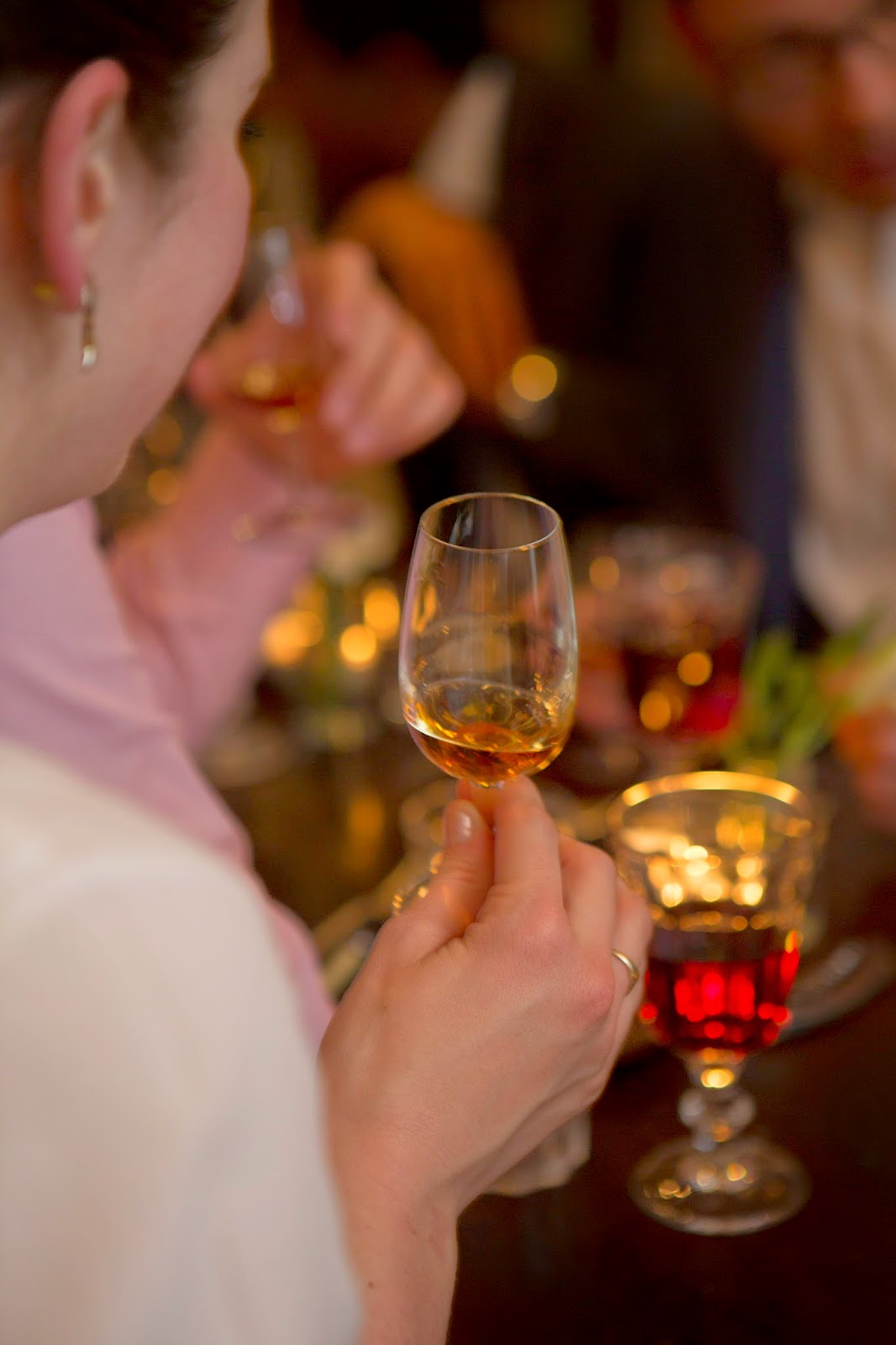
A Second Entrée – Tartare of Sea Bream, Apples, Fresh Herbs and Sake – was followed by an opportunity for Martell VS Cognac to show off solo. Pale gold in colour, top notes of apple and pear layered over subtler notes of spice and almonds, with a rich, almost creamy mouth-feel. A lovely glass.


Our Plat principal & Accompaniment was Parmentierde Confit de Canard aux Cepes Duxelles et Foie Gras With Green Leaf and Herb Salad in Vinaigrette Dressing. With this we enjoyed another wine  selection, Guillaume de Pratavone Ajaccio, a spicy, medium-bodied Corsican red made from a Grenache-Sangiovese blend not uncommon in Corsica’s Ajaccio region, which is otherwise famed as the birthplace of Napoleon Bonaparte.


A cheeseboard selection by Androuet Maitre Fromager of Spitafields was the perfect match for a glass of Martell Cordon Bleu, created in 1912 by Edourd Martell and long since renowned as a classic cognac. Dark and coppery, Martell Cordon Bleu has a complex nose of orchard fruits – plum, apricot, apple – interwoven with coffee and spices, most particularly cinnamon. Mellow and rich, it has a gloriously long finish.


We ended the evening with Tarte Tatin with Rosemary, Flaked Almonds and Crème Fraiche, which was served with an unusual Martell Cognac cocktail twist: a Martell & Coffee Martini, made with espresso, Martell VS Cognac and Irish cream liqueur and served in a martini glass and topped with two coffee beans.


It was a Very Special Night indeed, and one we’re sure that Jean Martell would have loved.


For recipes, cocktail ideas and further information on Martell Cognac’s 300th year anniversary, please visit www.martell.com or find them on twitter @MartellCognacUK


Senin, 16 Februari 2015

on Leave a Comment

Celebrating the Year of the Sheep at Yauatcha!

Words & Photography by Greg Klerkx and Luiz Hara

Name: Yauatcha

Where: 15-17 Broadwick Street, London W1F 0DL, http://www.yauatcha.com/

Cost: The Chinese New Year menu at Yauatcha features through 28 February, costing £70.50 per person (including Yang Walker cocktail).

About: The Year of the Sheep is nearly upon us, and there’ll be no shortage of Chinese restaurants in London offering special fare to ring in the New Year. Few are likely to match Soho’s venerable Yauatcha for quality, cleverness and value.

Yauatcha has long been a go-to place for top quality Chinese food, particularly for dim sum and its award-winning handmade sweets. It is also a favourite haunt of mine reviewed here last yearCreated by Alan Yau, the man who also launched the high-flying Hakkasan (reviewed here) with HKK being the latest addition to the group (reviewed here), Yauatcha is one of a handful of Chinese restaurants in London to have earned a Michelin star, which it has held for nearly a decade. Under head chef Tong Chee Hwee, the restaurant continues to be one of Soho’s most popular: we dined on a cold, bleak Tuesday evening and the restaurant was packed from start to finish.


The Chinese New Year Menu at Yauatcha (through 28th February 2015) offers a comfortable tour through the dishes that have made the restaurant’s reputation, though in truth it’s less a menu – each dish is priced a la carte – than a carefully curated package: some dim sum, some wok dishes, and the inevitably sweet (and delicious) finish. If you’ve never been to Yauatcha, the menu is an excellent way to ensure that you’ll want to come again.


What We Ate: Our meal used the Chinese New Year Menu as a starting point, with the joy of several additional dishes showing up at unpredictable intervals along the way. The first dish wasn’t on the Chinese New Year Menu: Baked venison puff (£5), a char siu dish that substituted barbecued venison for the more usual minced pork filling, to good effect; the puff pastry was flaky and flavourful, the sesame notes delicate but clear.


Szechuan dumplings (£4.95) were also not on the New Year menu, though they should be: the dumplings were melt-in-your-mouth and moreish, the pork filling tender and moist, the Szechuan sauce packed with zing. They also rather overshadowed the Goldfish dumplings (£6.80) that followed, which were on the menu. They were cute to look at, but far more plain on the palate.


Prawn and bean curd cheung fun (£8.00) was another off-menu treat. Much as a Thai restaurant’s reputation lives or dies by its Pad Thai, one can gauge the quality of a Chinese restaurant on the strength of its cheung fun, a ubiquitous dish in China made from rice noodles, rolled until almost translucent, and typically filled with fish, meat and/or vegetables and served with a sweet soy sauce.


In the wrong hands, cheung fun can be glutinous or sticky, the filling grainy or flavourless. No such problems at Yauatcha: the thin rice roll was velvety and smooth, the prawn filling rich and flavourful. The bean curd was lightly fried and wrapped between the rice roll and prawn, giving the cheung fun a wonderful, and unusual, crunch.  It was a highlight of the meal, and not to be missed. Next, we had a gorgeously presented steamed dumplings of prawns and tobiko eggs.


At this point in our meal, the Chinese New Year Menu reasserted itself with two excellent wok dishes. Mongolian lamb chop (£18.80) was sticky, smoky and fall-off-the-chop tender, and presented a strong case for foregoing utensils for fingers, the better to clean each chop of every bit of deliciousness.


Even better were the fried prawn balls with salted egg yolk (£17.80), which were positively decadent, the salted egg yolk infusing the crisped prawn filling with a deep, almost earthy flavour.


Here, the Chinese New Year Menu was to have moved onto dessert but we ordered two additional dishes to finish our savoury course with a bit of heat. Soft-shell crab with almond (£13.50) served its signature ingredient lightly-fried on a generous bed of spiced almond slivers, which allows the diner to effectively decide how much heat they desired with each bite of perfectly judged crab.


Spicy aubergine, sato bean, okra and French bean with peanut (£12.20) was our only purely vegetarian dish of the evening, though Yauatcha offers a good selection therein. Its heat punch was more pervasive than that of the crab, but the dish had such depth of flavour  - the strong, somewhat acidic sato bean played a big role here – that the spice never overwhelmed.


It could hardly be a Year of the Sheep menu without that lucky beast popping up somewhere, and Yauatcha served up not one but two sheepish desserts. Dulce de leche macarons (£1.80) were delightful: caramelised sheep’s milk coated with oats, crispy and chewy in exactly the proportions one would hope for. Sheep’s milk yoghurt bavarois (£8.80) was less successful. It was beautiful to look at and the lemon curd filling was fresh and tangy. But as a whole, there wasn’t quite enough dynamic range to this dish, either in taste or texture.


It would have been a disappointment to end on this slightly down note, but fortunately Fried sweet black sesame ball (£5.50) was an absolute stunner: crisp, perfectly formed balls of sesame-coated pastry, giving way to a warm, oozing sweet black sesame centre…a delightful finish.


What We Drank: We began with the menu’s signature cocktail, the Yang Walker (£11), a mellow and complex concoction of rosemary, lime, grapefruit juice, Johnnie Walker Black label whisky, ginger bitters, plum sake with a hint of Baijiu, a popular Chinese spirit usually made from sorghum, and which added a woody, smoky note.


Yauatcha features a strong wine list, and a bottle of The Navigator, Alpha Domus (2009, New Zealand; £40) possessed firm tannins and deep tobacco and blackberry notes that worked well across most of the dishes we had, not least the spicier offerings. 

Likes: the prawn and beancurd cheung fun as well as the fried prawn balls with salted egg yolk are not to be missed!

Dislikes: None.

Verdict: The Chinese New Year menu at Yauatcha features through the 28th February 2015, costing £70.50 per person (including Yang Walker cocktail) if you just order the items on the menu. You might want to add an extra dish here or there depending on your appetite, but Yauatcha’s clever, precise food is sure to launch your Year of the Sheep in delicious style.

Kamis, 23 Oktober 2014

on Leave a Comment

India Pale Ale - The Belgian Connection?


Words & Photography by Greg Klerkx and Luiz Hara

Beer is seemingly everywhere on London’s fine dining scene these days. It’s no longer odd for a Michelin-starred sommelier to recommend a fruit-infused brew instead of, say, a Muscat to finish, or even to hear the more heretical suggestion of a witbier to start. Craft brewpubs abound, growlers are the new must-have foodie toy, and everyone and their beer-making mother is trying to hop (no pun intended) onto the beery bandwagon.

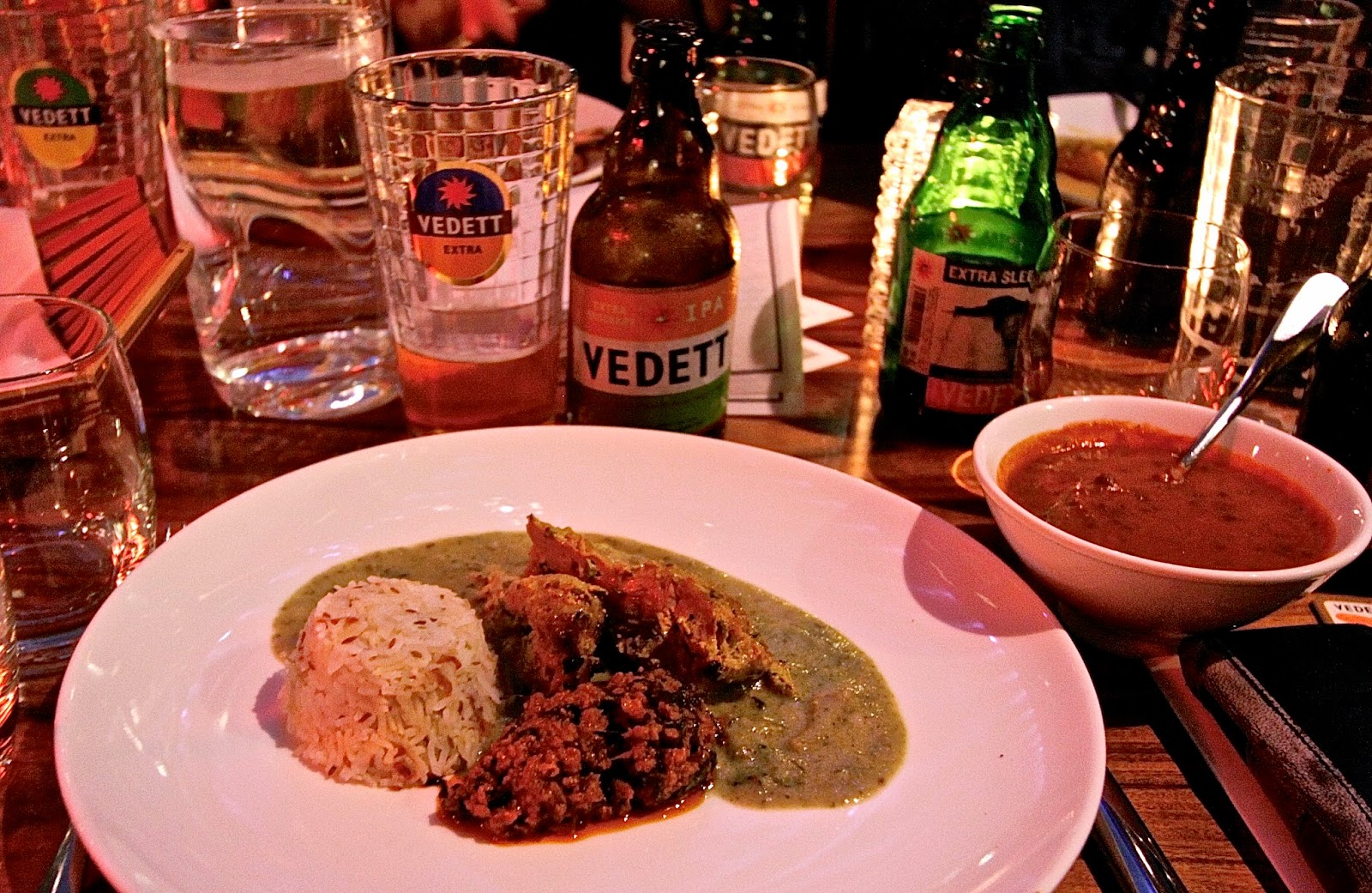
Uber-hip Belgian brand Vedett has been a fixture on the discerning beer drinker’s scene for longer than most, though many Londoners may only have encountered Vedett’s squat, cheerily-coloured bottles with their moules et frites at the local Belgo. Until now, Vedett, a self-described ‘cult’ brand in the larger Duvel group, has made only two beers and made them very nicely indeed: a hop-tastic, aromatic and eminently drinkable Extra Blond and a lightly fizzy, almost candied Extra White. So far, so Belgian.

This month, the laid-back label is taking a much bigger leap into the fray with the launch of Vedett Extra Ordinary IPA. IPA beers aren’t unknown in Belgium, though they are a fairly recent development and tend to be bolder, darker and punchier in flavour and alcohol content – Vedett’s is a hefty 5.5% – than English IPAs. They most closely resemble American IPAs and often use American hop varieties, as does Vedett’s.


Vedett offered a chance to sample its new IPA and other beers at Cinnamon Kitchen, the suit-and-tie branch of Vivek Singh’s very successful Indian restaurant empire. The intent was to show off great beer and great food, but also to demonstrate the versatility of beer as a stand-alone food beverage – suitable not just as a novelty against one course, but fully capable of carrying a sophisticated four-course menu.

The Vedett Extra Ordinary IPA featured twice during our meal, initially with a some rather delicious canapés that showed Cinnamon Kitchen to very good advantage. Particularly delicious was baked tilapia with Bengali mustard and sweet pepper coulis, which managed the difficult feat of packing a huge flavour punch whilst not steamrolling the delicate tilapia. Potato and green pea cakes with tomato chutney were also lovely: robust and zingy, moist and crispy in the right proportion.

As for the IPA, it was absolutely delicious: not as overwhelmingly hoppy as some IPAs, yet still firm and treacly, dark gold in colour and eminently drinkable. Though the Vedett representatives on hand were somewhat modest about their entry into the crowded IPA field, they should feel very confident. This one deserves to be a hit.

The evening’s other beer-food pairings also worked a treat. Vedett’s workhorse Extra White provided a gently fruity, slightly lemony complement to Tandoori salmon with dill & mustard, served with a wasabi-infused green pea relish.


The smoother, somewhat more elegant Vedett Extra Blond held up nicely against a Chargrilled chicken with yoghurt & coriander, and also went well with a rich, kicky black lentil daal served with naan bread between courses.


Cinnamon Kitchen’s shining moment of the evening came with its main course, an absolutely gorgeous Chargrilled lamb fillet with mint & onion sauce that was succulent and perfectly spiced, the lamb falling apart on the fork (and very quickly disappearing from the plate.) If the intention of the lamb course was again to show the Extra Ordinary IPA to good effect, it worked: the IPA was just as compelling here as it was at the beginning of the evening.


We finished with Shrikhand cheesecake, ginger & fennel seed crumble and glasses of iced Liefmans Fruitesse, a refreshing cherry-and-berry-infused beer that is a favourite at The LondonFoodie Supper Club. By that point in the evening, the point had been proved: the beer revolution in fine dining is here to stay, and justly so.